
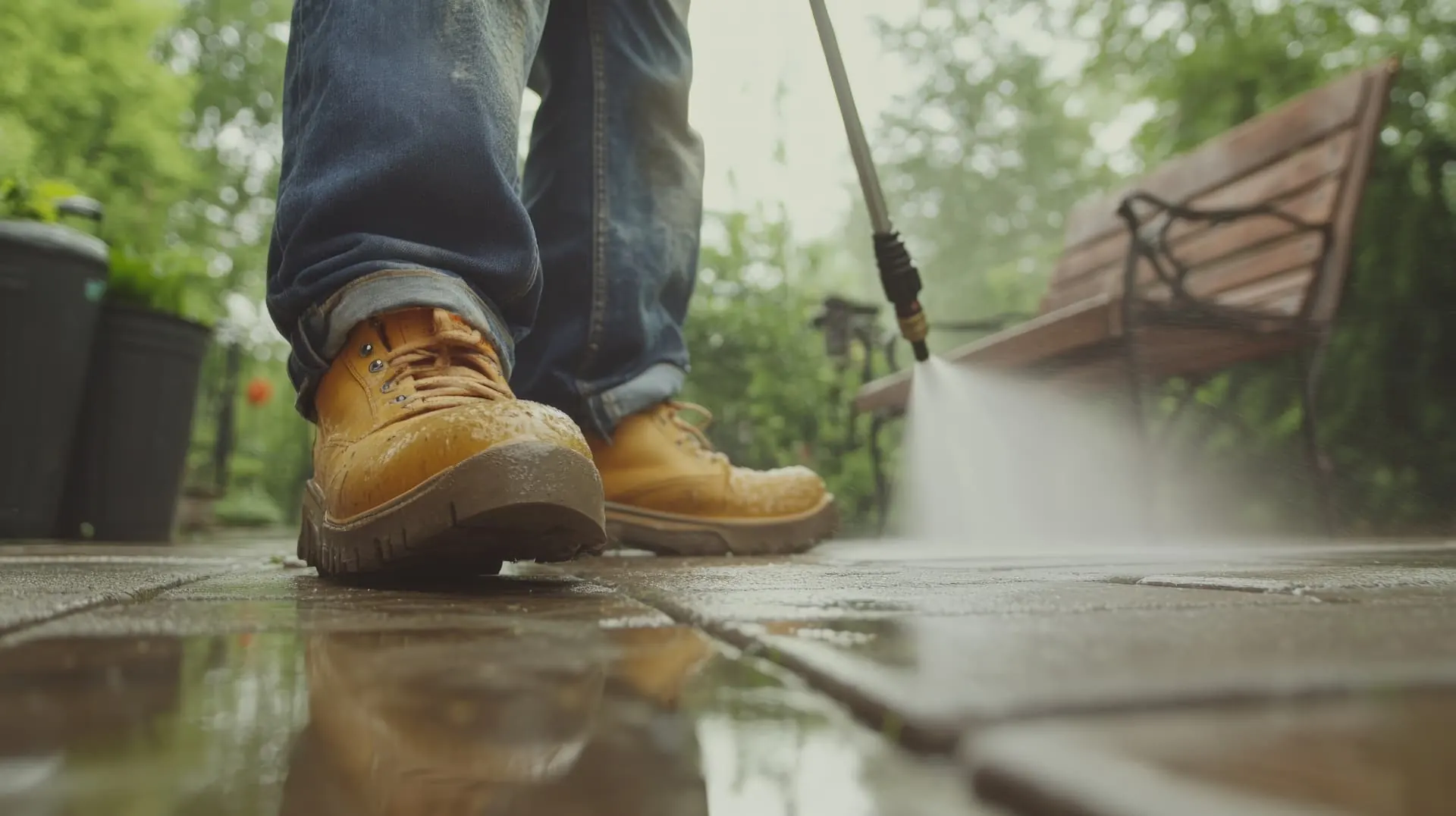
Quick answer
Yes — almost always. Paint doesn't bond well to dirt, mildew, pollen, or chalky old paint. Pressure washing strips that buildup away so the new coat can actually adhere to the surface underneath. Skipping it is one of the leading causes of early paint failure.
If you've ever seen paint peel or bubble within a year or two of a “fresh” paint job, surface prep is almost always the culprit — and pressure washing is step one of that prep. We treat it as a required part of every exterior paint job we do around Baytown, Mont Belvieu, and the greater Houston area, not an optional add-on. Here's why it matters and what it actually involves.
Does Pressure Washing Really Make a Difference?
Yes. Paint needs a clean, stable surface to bond to. Dirt, mildew, pollen, and chalky residue from old paint all sit between your siding and the new coat, creating a weak layer that fails faster — regardless of how good the paint itself is.
Pressure washing removes that layer entirely, exposing the actual surface so primer and paint can adhere the way manufacturers intend. It also reveals problem spots — rot, cracks, loose caulking — that need to be addressed before painting, which you'd otherwise paint right over.
Is Pressure Washing Enough on Its Own?
Not on its own — it's the first step, not the only one. After washing, surfaces still need time to fully dry, followed by scraping, sanding, caulking, and priming before paint goes on. Pressure washing without proper drying time can trap moisture under the new paint, which causes its own problems.
How Long Should a House Dry Before Painting After Washing?
Generally 24–48 hours, depending on humidity and temperature. Painting over a surface that's still damp is a common shortcut that leads to poor adhesion and premature failure.
What We've Seen On the Job
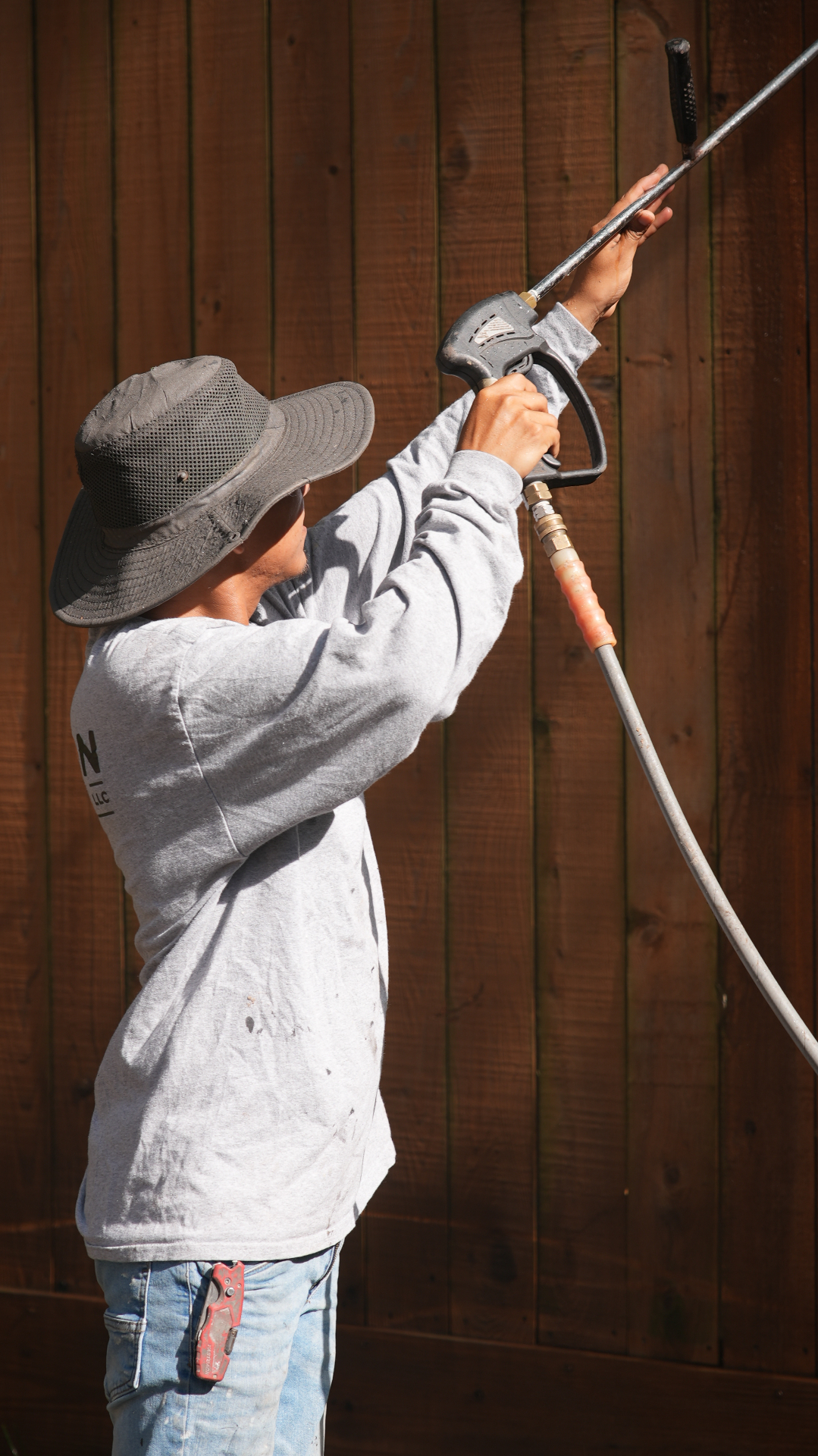
On most homes in our area, buildup on siding and trim is heavier than homeowners expect — Gulf Coast humidity accelerates mildew growth, and pollen season leaves a fine film that's easy to miss until you see the difference after washing. We pressure wash every exterior job before any prep work begins, dialing in pressure by surface — lower for wood trim, higher for concrete and brick — so we clean thoroughly without damaging the material underneath.
Frequently Asked Questions
Can pressure washing damage my siding?
It can, if the pressure isn't adjusted for the surface. Wood and vinyl need lower pressure than concrete or brick. That's why we set pressure by material, not a single setting for the whole house.
Do I need pressure washing if my house isn't visibly dirty?
Usually yes. Mildew, pollen film, and chalking from old paint often aren't obvious until washed — and paint applied over them fails early even if the surface looked clean beforehand.
Is pressure washing ever done as a standalone service?
Yes. While it's built into every painting job as prep, we also offer pressure washing on its own for driveways, siding, sidewalks, and patios — no painting required. Typically it's completed while we're onsite, but we can offer it as a standalone service.
Keep reading
Prep Is the Job: Why Painting Prep Work Matters Most
Washing is step one — scraping, sanding, caulking, and priming are what happen next. See why prep decides how long your paint lasts.
Final Thoughts
Pressure washing isn't a nice-to-have before painting — it's the foundation the rest of the job depends on. If you're getting quotes for exterior painting, ask whether pressure washing is included, and don't settle for a quote that skips it. Request a quote to see how we handle prep on your home.
Request a QuoteShawn Dyson | Published | Last Updated